Shinkansen Guide: How to Ride Japan’s Bullet Train (2026)
Last updated: May 2026
The shinkansen is, without exaggeration, the single best way to travel across Japan. It’s faster than flying for most domestic routes once you factor in airport check-in, security, and transfers. Tokyo to Osaka in 2 hours 21 minutes, city center to city center, with no baggage restrictions and no delays — the shinkansen network runs at an average delay of under one minute per year. If you’re visiting Japan in 2026, here’s everything you need to know.
Key Routes & Prices
Below are the most popular shinkansen routes for tourists, with approximate prices for a one-way reserved seat on the fastest train type.
| Route | Train | Time | Price (JPY) | Price (USD) |
|---|---|---|---|---|
| Tokyo → Osaka (Shin-Osaka) | Nozomi | 2h 21min | ¥14,720 | ~$97 |
| Tokyo → Kyoto | Nozomi | 2h 08min | ¥14,170 | ~$93 |
| Tokyo → Hiroshima | Nozomi | 3h 52min | ¥19,760 | ~$130 |
| Tokyo → Sendai | Hayabusa | 1h 32min | ¥11,410 | ~$75 |
| Tokyo → Kanazawa | Hakutaka | 2h 28min | ¥14,580 | ~$96 |
| Tokyo → Nagano | Kagayaki | 1h 20min | ¥8,340 | ~$55 |
| Tokyo → Hakodate | Hayabusa | 3h 58min | ¥24,010 | ~$158 |
| Osaka → Hiroshima | Nozomi | 1h 24min | ¥10,870 | ~$71 |
| Osaka → Fukuoka (Hakata) | Nozomi | 2h 25min | ¥16,020 | ~$105 |
Prices are for ordinary reserved seats (指定席). Unreserved seats are roughly ¥500–¥1,000 cheaper. USD conversions are approximate at ¥152/USD.
How to Buy Tickets
There are several ways to get your shinkansen tickets. Each has trade-offs between convenience and price.
1. At the Station (Midori-no-Madoguchi)
Every major JR station has a ticket counter called “Midori-no-Madoguchi” (みどりの窓口), marked with a green sign. Staff speak basic English at major stations like Tokyo, Shinagawa, Kyoto, and Shin-Osaka. You can also use the ticket vending machines — newer models have an English interface. This is the most common method and works perfectly fine, though expect lines during peak travel seasons (Golden Week, Obon, New Year).
2. Online via SmartEX / Shinkansen Smartway
The SmartEX app lets foreign tourists book Tokaido-Sanyo-Kyushu Shinkansen tickets online with a credit card. You can link it to a Suica or PASMO on your phone and tap through the gate — no paper ticket needed. This is the most convenient option for the Tokyo-Osaka-Hiroshima-Fukuoka corridor.
3. Reserved vs. Unreserved Seats
Reserved (指定席): Your specific seat is guaranteed. Essential during peak periods and recommended for longer trips. Book in advance at a counter, machine, or via SmartEX.
Unreserved (自由席): Cheaper by about ¥500–¥1,000. Board cars 1–3 (sometimes 1–5) and sit in any open seat. If the train is full, you stand. Works great for short routes or off-peak travel — just show up and hop on the next departure.
JR Pass vs. Individual Tickets
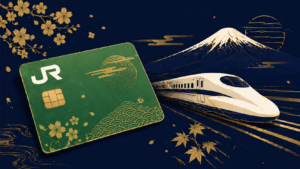
The Japan Rail Pass (JR Pass) gives you unlimited travel on most JR trains, including most shinkansen lines. But after the 2023 price increase, it’s no longer an automatic “must buy.” Here’s how to decide.
| Scenario | JR Pass 7-Day (¥50,000 / ~$329) | Individual Tickets |
|---|---|---|
| Tokyo → Kyoto round trip only | ¥50,000 | ¥28,340 (Hikari) |
| Tokyo → Kyoto + Hiroshima day trip | ¥50,000 | ¥49,460 |
| Tokyo → Osaka → Hiroshima → Fukuoka | ¥50,000 | ¥44,560 |
| Tokyo → Kyoto → Nara → Osaka → Hiroshima → Miyajima | ¥50,000 | ¥55,000+ |
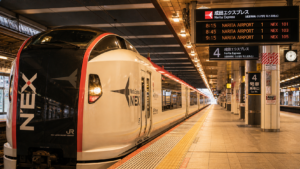
When the JR Pass is worth it: Three or more long-distance trips in 7 days, or if you plan to use local JR trains heavily (they’re included too). The pass also covers the Narita Express and many JR buses.
When it’s NOT worth it: A simple Tokyo-Osaka round trip, or if you’re staying in one city most of the time. Also note: the JR Pass does not work on Nozomi or Mizuho trains — you’ll need to take the slightly slower Hikari or Sakura instead, which adds about 15–20 minutes on Tokyo-Osaka.
If you decide the JR Pass makes sense for your trip, you can purchase it online and pick it up at a JR station in Japan. Buying through a travel platform often saves time.
Order online, pick up at major JR stations. Klook often has promotional pricing and instant confirmation.
Which Car to Sit In
Not all seats are created equal. Here are some tips for choosing the best spot.
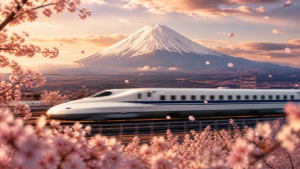
Mount Fuji view (Tokyo → Osaka direction): Sit on the right side of the train (seats D and E on the Tokaido Shinkansen). The best views come between Shin-Yokohama and Shizuoka, roughly 40–50 minutes after departing Tokyo. On clear days, Fuji is absolutely spectacular. Going back from Osaka to Tokyo, sit on the left side (A and B seats).
Green Car (グリーン車): This is first class. Wider seats (2+2 layout vs. 3+2 in ordinary class), more legroom, quieter atmosphere, and a footrest. It costs roughly 40–50% more than ordinary reserved seats. Worth it on 3+ hour rides if you want to spread out.
Cars to avoid if you want quiet: Avoid the cars right next to unreserved sections (cars 4–5) during peak times — they get noisy with people standing in the aisles. Car 1 can also be loud as it’s near the boarding area for unreserved passengers.
Onboard Guide
Ekiben (駅弁) — Station Bento Boxes
Eating on the shinkansen isn’t just acceptable — it’s a tradition. Pick up an ekiben at the station before boarding. Tokyo Station has over 200 varieties at the “Ekiben-ya Matsuri” shop (gransta area, near the Yaesu central exit). Regional specialties change by station. Expect to pay ¥1,000–¥1,800 for a quality bento. Beer and snacks are also sold at kiosks on the platform.
Luggage
Since May 2020, if you have oversized luggage (total dimensions over 160cm / 63 inches), you must reserve a seat with an oversized luggage area behind the last row of certain cars. This is free — just select it when booking. If you show up without a reservation and have oversized bags, you’ll be charged ¥1,000. Standard carry-on suitcases (under 160cm total) fit in the overhead rack with no reservation needed.
Wi-Fi & Power Outlets
Free Wi-Fi (Shinkansen Free Wi-Fi) is available on Tokaido, Sanyo, and Tohoku lines. It disconnects every 30 minutes and you need to reconnect — mildly annoying, but functional for messaging and light browsing. All N700S series trains (now the majority on the Tokaido line) have power outlets at every seat. Older trains only have outlets on window-side and aisle-end seats.
Etiquette
– Phone calls: Do not make calls in the seating area. Step to the deck area between cars.
– Reclining: You can recline your seat, but a small nod to the person behind you is appreciated.
– Volume: Keep conversations at a low volume. Most Japanese passengers are silent.
– Shoes: Keep them on, but feel free to slip into the provided slippers in Green Car.
– Trash: Take your trash with you or use the bins on the platform when you exit.
Tips & Hacks
Last-Minute Unreserved Hack
On the Tokaido Shinkansen, trains depart Tokyo Station every 3–7 minutes during the day. If your reserved train is full, you can always buy an unreserved ticket and ride the next departure. Queue early at the platform — unreserved cars fill up from the front of the line, so arriving 10–15 minutes before departure usually gets you a seat, even on moderately busy days.
Nozomi vs. Hikari vs. Kodama
Nozomi = fastest, fewest stops. Tokyo to Osaka in 2h 21min. Cannot use JR Pass.
Hikari = slightly slower (2h 40min to Osaka), fewer departures. JR Pass OK.
Kodama = local, stops at every station. Tokyo to Osaka in ~4 hours. Only useful for short hops.
If you don’t have a JR Pass, always take the Nozomi — same price, just faster.
SmartEX Early Booking Discount
Book via SmartEX 21 days in advance (“EX Hayatoku 21”) and save up to 30% on certain routes. Tokyo to Shin-Osaka drops from ¥14,720 to around ¥11,200. The catch: these tickets are non-refundable and non-changeable, so only use this if your plans are locked in.
Suica / PASMO Tap-Through
If you book through SmartEX and link your IC card, you can tap through the shinkansen gate with your phone or watch — no paper ticket at all. This is genuinely one of the smoothest train experiences anywhere in the world.
FAQ
Can I bring large suitcases on the shinkansen?
Yes, but if total dimensions exceed 160cm (roughly 63 inches), you must reserve an oversized luggage seat in advance (free of charge). Bags under 160cm go in the overhead rack.
Do I need to book seats in advance?
Not necessarily. You can buy unreserved tickets and board any unreserved car. But for peace of mind — especially during holidays or if traveling with kids — reserved seats are strongly recommended.
Is the JR Pass still worth it in 2026?
It depends on your itinerary. For three or more long-distance trips in a week, yes. For a simple round trip between two cities, individual tickets are cheaper. Use the comparison table above.
Can I use my JR Pass on the Nozomi?
No. JR Pass holders must use Hikari, Sakura, or Kodama trains. The Nozomi (fastest Tokaido/Sanyo) and Mizuho (fastest Sanyo/Kyushu) are excluded.
What if I miss my reserved train?
Your reserved seat is forfeited, but you can still ride any later train on the same day in the unreserved cars using the same ticket. No extra charge.
Is there food on the train?
Onboard cart service has been discontinued on most routes as of late 2023. Buy your food and drinks at the station before boarding. Every major station has convenience stores and ekiben shops on or near the platform.
How early should I arrive at the station?
Unlike airports, you don’t need to arrive early. 5–10 minutes before departure is plenty. If you have a reserved seat, you can show up 2 minutes before and be fine. The trains are punctual down to the second.
—
Ready to plan your shinkansen journey? If you’re doing multiple long-distance trips, grab a JR Pass to save time and money.
—
Related Articles:
– Is the JR Pass Worth It in 2026?