Japan Travel Guide for Australians: Your Complete Planning Guide (2026)
Japan is consistently one of the top international destinations for Australians — and for plenty of good reasons. Short-ish flight times compared to Europe or the US, no visa needed, incredible food, and a culture that’s genuinely different without being inaccessible. Whether you’re departing from Sydney, Melbourne, Brisbane, or Perth, this guide covers everything you need to plan your Japan trip in 2026.
—
Visa: Do Australians Need One?
No. Australian citizens can enter Japan visa-free for up to 90 days for tourism. You simply present your Australian passport at the immigration desk on arrival.
Requirements:
– Valid Australian passport
– Return or onward ticket
– No criminal history
No pre-registration, no fee, no e-Visa application. Japan is entirely hassle-free from a visa perspective for Australians.
—
Flights from Australia to Japan
Australia has excellent direct connections to Japan, making it one of the more accessible long-haul destinations.
| Departure | Destination | Duration | Airlines |
|---|---|---|---|
| Sydney (SYD) | Tokyo Narita (NRT) | ~9.5–10 hours | Qantas, JAL, ANA |
| Melbourne (MEL) | Tokyo Narita (NRT) | ~10–11 hours | Qantas, ANA |
| Brisbane (BNE) | Tokyo Narita (NRT) | ~9.5 hours | Qantas, JAL |
| Perth (PER) | Tokyo | ~13–14 hours (1 stop) | Various via SIN or KUL |
| Sydney (SYD) | Osaka Kansai (KIX) | ~10 hours (seasonal) | Qantas |
Fare guidance: Return fares from Sydney or Melbourne to Tokyo typically range AUD $800–$1,400 economy. Book 3–5 months in advance. February, June, and September offer the best fares.
Budget tip: Consider flying into Osaka Kansai on the Qantas seasonal service if you want to start your trip in Kyoto/Osaka. Flying home from a different airport than you arrived at (open-jaw) is usually the same price and saves backtracking.
—
The Time Zone Advantage
This is one of Australia’s biggest advantages for Japan travel. Japan Standard Time (JST, UTC+9) is very close to Australian eastern time:
– AEST (UTC+10): Japan is only 1 hour behind
– AEDT (UTC+11, daylight saving): Japan is 2 hours behind
– AWST (Perth, UTC+8): Japan is 1 hour ahead
For Sydney and Melbourne residents, the time difference is minimal — you’ll feel minimal jetlag compared to travellers from Europe or North America. You can arrive in Japan and be fully functional from day one.
—
Opposite Seasons: Planning Around Australia’s Calendar
Because Australia’s seasons are opposite to Japan’s, this creates some interesting planning opportunities:
| Australian Season | Japan Season | What’s Happening in Japan |
|---|---|---|
| Summer (Dec–Feb) | Winter | Snow country, ski resorts, Christmas illuminations |
| Autumn (Mar–May) | Spring | Cherry blossom season (late March–April) |
| Winter (Jun–Aug) | Summer | Matsuri festivals, hydrangeas, heat and humidity |
| Spring (Sep–Nov) | Autumn | Autumn foliage, comfortable temperatures |
Australian school holidays in July coincide with Japan’s summer — popular but hot. The December–January school holiday period means Japan winter — great for skiing in Hokkaido or Nagano if you’re into snow sports.
—
AUD Budget for Japan
The Australian dollar’s strength against the yen varies, but at current rates Japan represents excellent value for Australians.
Daily budget estimates (AUD per person):
| Budget Level | Daily Spend (AUD) | What’s Included |
|---|---|---|
| Backpacker | $55–$80 | Hostel dorm, konbini food, minimal paid attractions |
| Mid-range | $110–$160 | Private room, restaurant meals, day trips |
| Comfortable | $170–$230 | Business hotel, dining out, cultural experiences |
| Luxury | $300+ | Ryokan, kaiseki, private onsen |
Full breakdown: How Much Does 1 Week in Japan Cost?
—
Cash and Cards
Japan is cash-heavy, though card acceptance is improving. Key points for Australians:
– ATMs: Use 7-Eleven, FamilyMart, or Lawson ATMs — all accept Australian Visa/Mastercard
– Bank fees: Commonwealth Bank, ANZ, and Westpac charge foreign transaction fees. Wise or a no-fee travel card (like ING Orange Everyday) saves you money on every withdrawal
– How much to carry: Withdraw AUD $300–$400 equivalent in yen when you arrive and top up at convenience stores as needed
Full guide: Japan Money Guide: Cash, Cards, ATMs, and Currency Exchange
—
Getting a SIM Card or eSIM
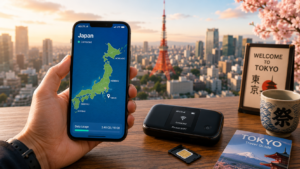
Your Telstra, Optus, or Vodafone plan won’t cover Japan for free. Get a Japan eSIM instead:
Full guide: Best eSIM for Australian Travellers to Japan or the full comparison: Best eSIM and Pocket Wi-Fi for Japan (2026)
Browse Japan Activities on Klook →
—
Getting Around Japan
Japan’s train system is brilliant and can seem complex at first. Stick to the Suica or ICOCA IC card (a prepaid smart card) for local travel and book Shinkansen tickets in advance.
Beginner’s guide: Japan Train Guide for Beginners
JR Pass: Worth considering for Australians doing a multi-city itinerary. Full analysis: Is the JR Pass Worth It in 2026?
—
Power Adaptors for Australians
Japan uses Type A (two flat pins, like US plugs) at 100V. Australian plugs are Type I (angled pins). You WILL need a travel adaptor.
Most Australian chargers (phones, laptops) are labelled “100–240V” and will work fine with just a plug adaptor — no voltage converter needed. Buy one before you leave; adaptors at Japanese airports and hotels are expensive.
—
Cultural Tips for Australians
Australians are generally relaxed and direct communicators — a contrast to Japanese social customs:
– Quietness in public spaces: Avoid loud conversations on trains. Keep it down.
– No tipping: Absolutely none. It’s not the custom and can cause awkwardness.
– Queuing: The Japanese queue for everything — trains, convenience stores, restaurants. Always join the back of a line.
– Shoes off: Remove shoes in traditional settings — ryokans, some restaurants, temples.
– Pointing: Pointing at people is considered rude. Wave your hand instead.
Full guide: Japan Etiquette Guide: 15 Rules Every Tourist Should Know
—
Recommended Itinerary for Australian First-Timers
A 12-day trip from Sydney or Melbourne:
Days 1–3: Tokyo
Shibuya, Shinjuku, Asakusa, teamLab. Guide: Tokyo 3-Day Itinerary
Day 4: Hakone or Nikko day trip
Mt Fuji views or historic Nikko shrines.
Day 5: Bullet train to Kyoto
Gion evening stroll.
Days 6–7: Kyoto and Nara
Fushimi Inari, Arashiyama, and a morning in Nara’s deer park. Guide: Kyoto in One Day
Days 8–9: Osaka
Dotonbori, Kuromon Market, Osaka Castle. Guide: Osaka 2-Day Itinerary
Day 10: Day trip to Hiroshima
Peace Memorial Museum and Miyajima Island.
Days 11–12: Return to Tokyo, fly home
—
Getting from the Airport
Your first practical challenge on arrival. Read our guide: Japan Airport to City: The Cheapest Way from Narita, Haneda, and Kansai
—
Bottom Line for Australian Travellers
Japan is one of the most rewarding destinations Australians can visit — close enough to minimise jetlag, safe, incredibly food-forward, and genuinely different. With smart planning and an eSIM sorted before you fly, the logistics are simple. Go. You won’t regret it.